
This story was originally published by Archer Magazine in June 2026.
Being a carer within the LGBTIQIA+ community can look many different ways. While caring relationships are often thought of as happening solely within biological family relationships, this is a misconception: queer identities and experiences expand the definitions of caring in a plethora of incredible ways.
Chloe’s Story
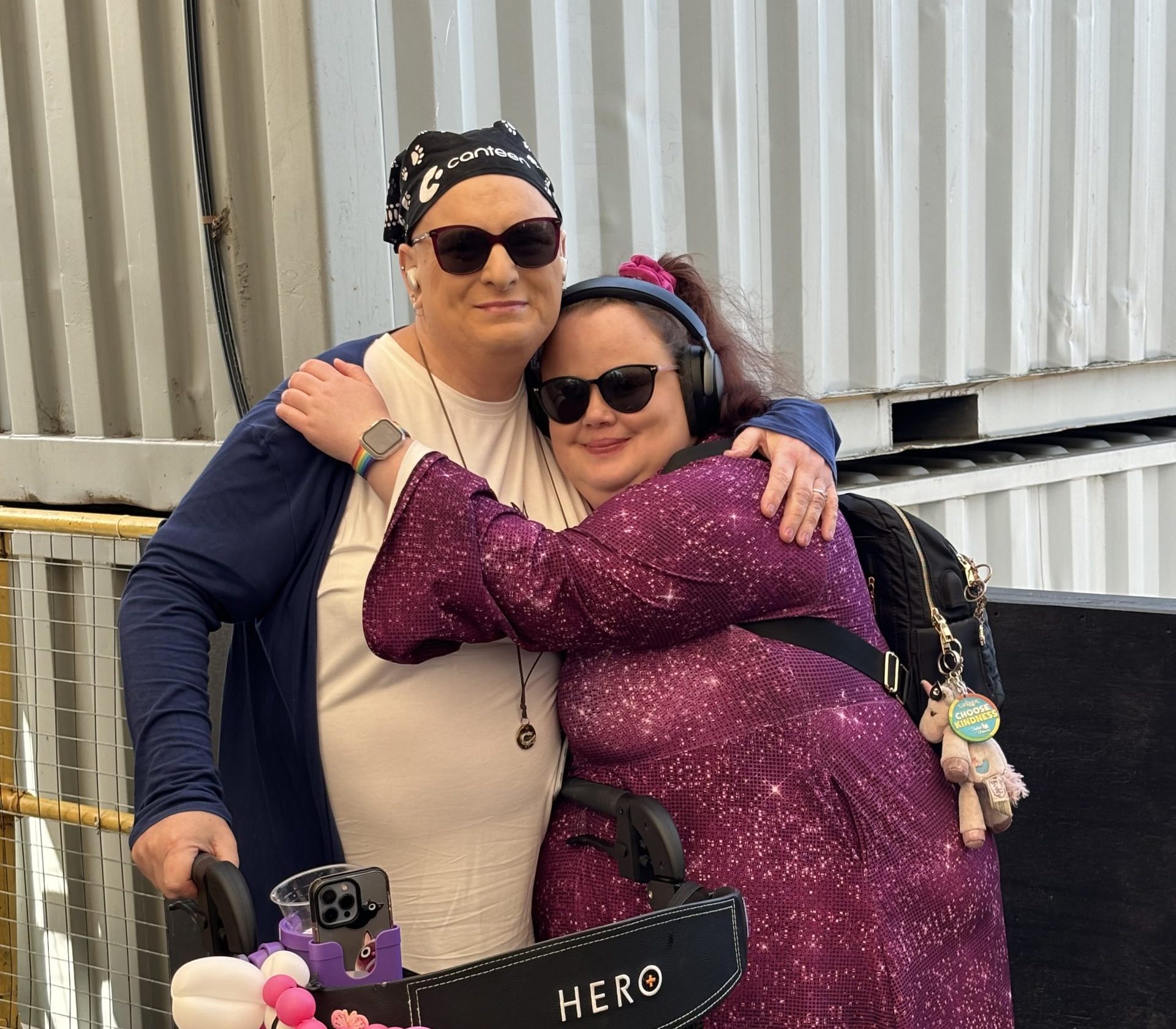
I’m a carer for my best friend, and I also identify as disabled.
My best friend and I live together. In our situation, we don’t always have a clearcut carer-recipient relationship. It can be reciprocal: there are times when I’ve been the one who’s needed care.
I’m autistic, and I live with mental health conditions. As part of the disabled community myself, I feel strongly that I’m not a hero for being a carer. I’m just a person who’s doing what I feel is right. My care recipient is not a burden; we’re both just people living our lives.
Carers are so often only thought of as parents with young children. But anyone receiving care deserves autonomy, privacy and to be treated with respect.
My best friend has trouble with organisational tasks. In our household, I keep track of the financials, help her manage her money, and make sure our bills get paid.
Every Sunday, I sit down and make sure that our tablets are sorted into our Webster packs. I’ll make sure that we’ve got enough on supply.
I’ll check things like: Do we have enough scripts? Do I need to make sure she’s got a doctor’s appointment to organise her scripts or any sort of medical needs to be addressed?
Last year in January, I came out as gay. I joined some women-loving-women groups on Facebook. Some people in the group had opinions about relationships that I didn’t agree with.
My best friend and I have a beautiful relationship. It’s not a romantic relationship, but a platonic one. In my eyes, that’s still as valuable.
Our relationship keeps getting deeper. The love we have for each other is there. I wish that these relationships were valued as highly as romantic ones, especially among fellow queer folks.
Looking back, I actually didn’t realise that I’d become a carer until maybe three or four years into my caring journey, around 2019 or 2020.
There are a lot of misconceptions that caring will always involve things like toileting, showering or manual hoisting. Because I didn’t do any of that, I thought, Well, I’m not a carer.
But people need different things. Caring doesn’t always involve those tasks.
It was when I joined the Carer Gateway Advisory Committee that I sort of went, Actually, no, I am a carer.
I absolutely love being on the advisory committee. We give feedback on all the different programs that Carer Gateway offers. Some people go to different events to help people to access supports, or even just have chats because, like me, they might not yet know they’re a carer.
I think the biggest message I’d like to pass on is that you may be a carer and not recognise it. And as a carer, it’s important to access support, because it really takes a village.
ပိုမိုရှာဖွေပါ။